Background
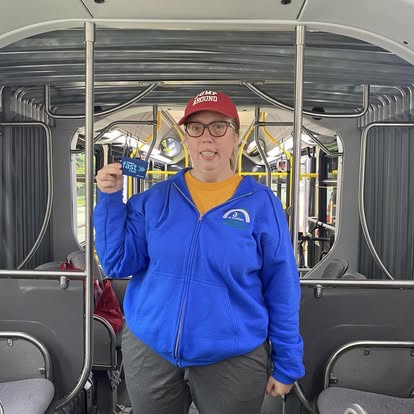
Abigail is 34 years old and lives in Wisconsin. She describes herself as an advocate, teacher, friend, and dog lover. She is outgoing and enjoys helping others. She likes spending time with her family locally and across the country, going for walks or bike rides, singing in the choir, and volunteering—especially running concession stands at the University of Wisconsin Badger football games. Abigail works as a special education substitute teacher. She also owns her a business, Transit2GO, teaching people how to ride the bus independently in Madison, Wisconsin. Besides that, she volunteers as a member, peer mentor, and speaker with several groups advocating for state and local legislation to improve the lives of people with disabilities.
What’s Important
Since she was in kindergarten, Abigail enjoyed being around her teachers, helping them and watching how they worked with students. Throughout elementary and high school, Abigail shadowed her teachers to learn more about their jobs and assisted with after-school programs. When she finished high school, Abigail decided to move from her rural hometown to college in the city to study teaching.
Upon relocating to the city, Abigail had to quickly learn how to use the city’s public transportation system. Learning all the city bus routes was challenging, especially when trips took a long time and when she was traveling during cold Wisconsin winters. However, Abigail also gained a newfound sense of independence using the public transit system. She first learned how to use the bus system from a peer mentor at Edgewood College, which enabled her to get to practicums at different schools. From there, she enjoyed sharing that independence by teaching other students how to use public transportation. Abigail shared, “I had to learn the bus system myself, and I realized I could teach others too.”
As Abigail was completing college, she struggled to find her first job. So, she decided to work with her counselor from the Department of Vocational Rehabilitation (VR) to turn her love of teaching other people to use the public transit system into a paid college-level internship and possibly a business. When she finished her internship successfully, she and her VR counselor worked on starting her business.
Around the same time, Abigail learned about self-directed services. “I think I first learned about Medicaid self-directed services from my mom and our DVR counselor,” she shared. Abigail applied for services from Include, Respect, I Self-Direct (IRIS), a state provider of self-directed services. She uses self-directed services for support both at home and at work. She hired someone to help with daily living tasks like cleaning, grocery shopping, meal prep, cooking, and running errands. Abigail also used self-directed services to support her business and to find other job opportunities in teaching to increase her work hours.
Abigail created an employment team made up of her VR counselor, her IRIS consultant, her mom, and her supports broker.
“They helped me set up for success,” Abigail says. “They help me figure out what to do when. My job coaches were chosen through my supported employment agency and are paid through my IRIS funding (Medicaid). I do have a service budget, which includes weekly hours for job coaching and help from my personal hired worker. My support team, family, and I made those decisions based on my functional screen and the level of funding available.”
The use of self-directed services gives Abigail a voice in making decisions about her support. As she explains, “When I started using self-directed services, I really wanted to make sure I had a voice in the decisions being made about my support.” This allows her to choose who supports her, how, and when, ensuring that her services reflect her goals.
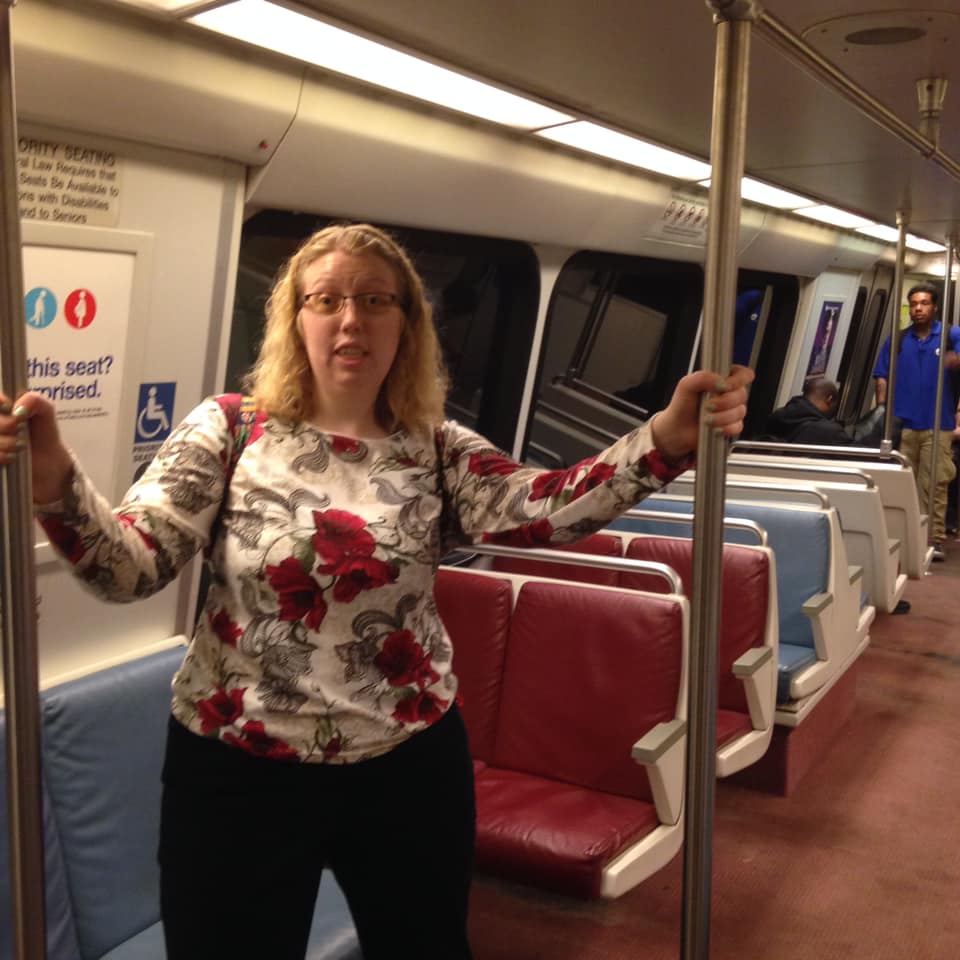
Abigail launched her business, Transit2GO, in 2018. She offers group and individual training and presents to local organizations to help them understand accessibility and public transportation. Abigail also travels to other cities to use their transit systems and shares those experiences as well. “It helps that I’ve also traveled to other cities and learned different transit systems,” Abigail shared, “I’ve done the subway in Boston and trains in New York and New Jersey.” Abigail uses self-directed services to purchase transit passes and shared rides and to pay her job coach for help running her business.
What Happened
Abigail is the sole proprietor of her travel training business, Transit2GO. People who would like training on the public transit system fill out an intake form on her site or contact her directly to discuss their needs. Abigail evaluates their requests and plans out routes, with support as needed from her job coach. Abigail and her students go over what to expect on their trips and any questions about such things as planning for travel time and using bus passes. Abigail uses self-directed services provided through IRIS to hire support staff and cover the cost of rides while training students. Abigail’s employment team supports her as needed with record keeping for her business expenses, working with students, and billing for services. Over the life of the business, Abigail’s self-directed services have funded job coaching supports in several ways, including help with scheduling, evaluating requests for services, planning routes, maintaining the business website, billing, and record keeping.
Abigail also works as a special education substitute in her local school district. “I wanted to stay in the teaching field after working in an after-school program,” she says, “but I needed something that was a better fit for me. My team helped me complete applications, prepare for interviews, and get all the necessary paperwork in order. They also supported me with professional development and training.” Abigail combined DVR funding and self-directed services to prepare for, find, and maintain her position as substitute teacher.
Self-directed services give Abigail the flexibility and control to shape her workweek around her goals and preferences. She chooses which substitute teaching jobs to take and schedules Transit2GO training sessions with students. When needed, her job and career coaches support her to stay organized. Reflecting on what self-direction means to her, Abigail shared, “For me, it means having control over how and when I use services. I decide who supports me and how. It’s about choosing what’s right for me and not feeling like I have to do it all alone… Self-direction lets me customize services, add what I need, and keep what works.”
Lessons Learned
Self-direction gives people control. Self-directed services empower individuals to make decisions about how they live and work. Having a say in daily schedules, job choices, and support needs fosters independence and ownership and allows people to lead their lives on their own terms.
Identifying a support team is essential. Identifying a trusted team helps ensure the right balance of independence and support. The team can include family members, job coaches, friends, or service providers. Teams can help manage self-directed services and provide support for decision making.
Self-direction allows services to be customized. A major benefit of using self-directed services is the ability to align supports with a person’s interests and needs. This enables people to choose what works for them, modify what doesn’t, and build a flexible plan that evolves over time.
Combining funding allows for more comprehensive supports. Combining funding sources, such as VR and self-directed Medicaid funds, can provide people with more comprehensive and flexible supports to achieve their employment goals. Using more than one funding source can help people get a wider range of support, from skills building and job applications to on-the-job training and coaching.