Background
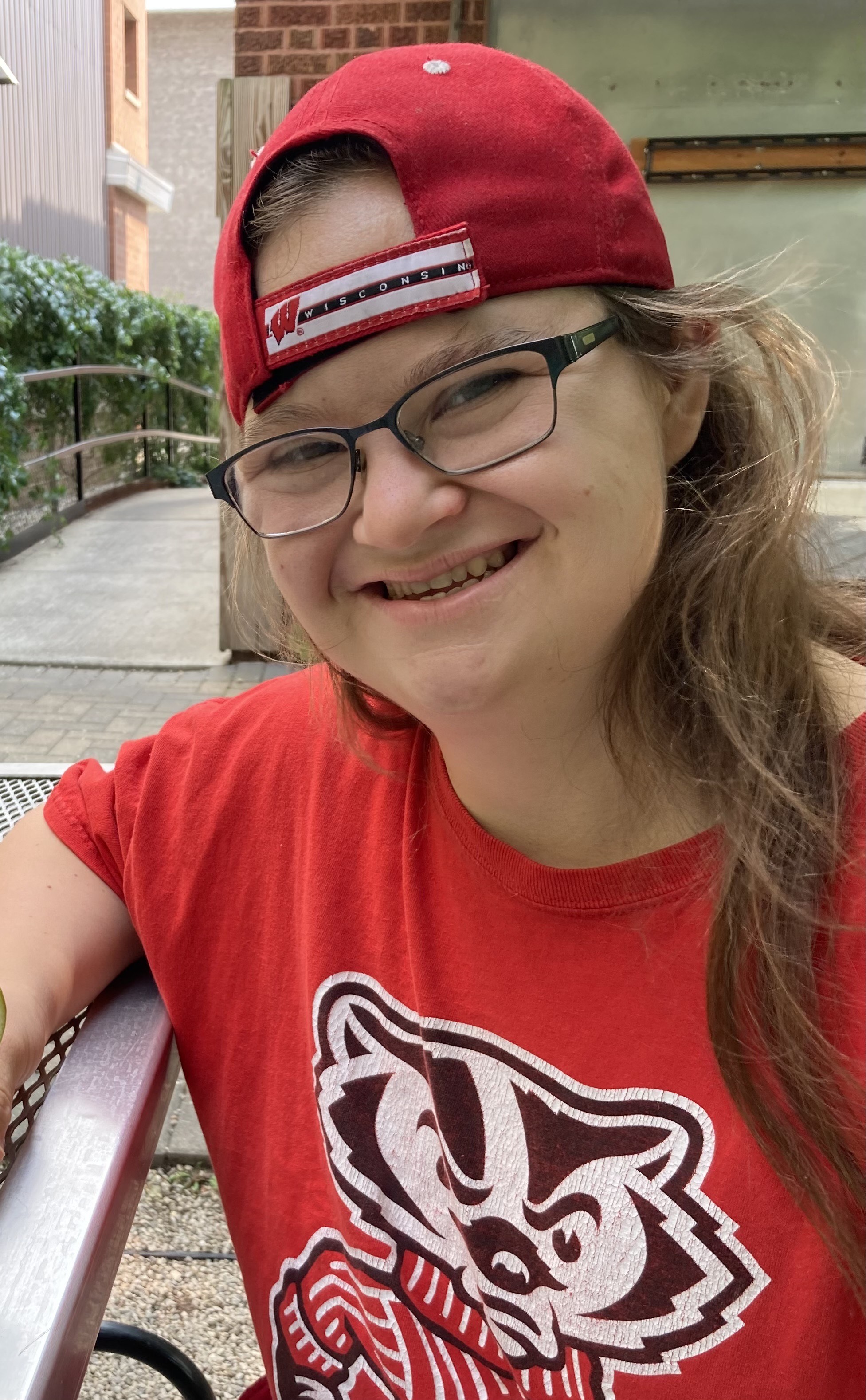
Annie is a young woman who describes herself as kind and hardworking. She also loves to play sports. Annie works at a teaching hospital as a sterile processing transporter. She has worked at the hospital for six years and held previous jobs at a clothing store and a hair salon. Having a job in the community has helped Annie do the things she wants to do, such as traveling and living independently. Annie feels supported by her coworkers and is an active member of her community. She is a Special Olympics athlete and recently traveled to Italy to compete with the USA Special Olympics snowshoe team.
What’s Important
Annie has worked in several businesses and with community service organizations that supported her job search and helped her build her skills. Annie’s previous work included cleaning at a hair salon, and before that she worked at a used clothing store. But Annie knew she was capable of more.
When she turned 18, Annie was presented with options for her future. The two most likely options for her were “family care” or the Wisconsin self-directed services model, called “Include, Respect, I Self-direct,” (IRIS). Self-directed services gave her much more flexibility, more control over what services she would receive, and more say in how she spends her budget and time. Annie was concerned that family care would limit her options, and that she might be less able to do all the things she is capable of.
Annie worked with the Wisconsin Department of Vocational Rehabilitation (DVR) and her teachers, family, and professional network to develop skills and find a job she enjoyed. Annie took some classes at a technical college in Madison. Then, she enrolled in Project Search, a year-long program that provides education, on-the-job internship experience, and job search services for people with disabilities. During the program, which was funded through the local school district, Annie worked in a teaching hospital in her community. She got to intern in the pharmacy, in the hospital supply distribution, and with staff to deliver things where they need to go.
Annie meets with a job coach several times a week to ensure that she feels comfortable with her job responsibilities and to get her support needs quickly addressed. She pays for a job coach through IRIS. Annie lives near her job site so she can walk to work. She was able to find housing to live independently with two other women who also self-direct services with IRIS. Annie and one of her roommates use their self-directed budgets to split the cost of a professional from the Down Syndrome Society to come to their home and help them learn to cook and prepare meals, which Annie included in her goals for independent living.
IRIS offers a consultant that supports Annie with budgeting for and scheduling her services, and she has had a long-term and consistent relationship with her IRIS consultant in spite of turnover with her job coaches. While turnover has led to Annie having several job coaches, she and her family do not perceive this as a major challenge, with Annie’s mom stating, “you know, you just have to roll with it.” Annie’s mom also shared that Annie’s IRIS consultant is easy to work with, so they would take on more of a role in hiring if issues arose: “We didn't have a role in it [the hiring process]. If there would have been a problem, though, [Annie’s consultant] would have been perfectly okay with changing it... that's one of the advantages of [self-directed services].”
Annie fills out and approves her staff’s timesheets independently through a phone-based app. Annie acknowledges that the budgeting side of self-direction is not her strong suit, so her parents help to keep her budget in order. Annie and her family will also meet with her IRIS consultant to review the budget and make adjustments as needed to ensure Annie is able to accomplish her goals.
What Happened
Supported through Project Search, DVR, and IRIS, Annie interviewed for and was able to customize a job at a local hospital, where she works as a sterile processing transporter. She had built a relationship with her employer during her internships. Her responsibilities include collecting items, primarily scopes, from the sterile processing area and bringing them to the clinics, then returning the used items from the clinics to the sterile processing area to be cleaned and sterilized. She earns a competitive wage and works full-time. Annie says her favorite part of the job is, “well, like everything.” She especially enjoys how active her job is: “I often have over 20,000 steps a day since I started working. I have lost over 50 pounds. So, my job is also very healthy for me.” Annie interacts with many hospital employees every day and feels very involved and connected to her colleagues. She also receives natural support from her coworkers. Even outside the workplace, her coworkers have become part of her social network. Recently, her coworkers helped her study helpful Italian phrases to prep for her trip to Italy to compete in the Special Olympics. Several of her coworkers travel to her state games.
Annie was very happy to report that through self-directed services, “[I] can do whatever I want...”. “Within budget,” her mom added and laughed. Annie went on to share that she really appreciates the freedom of choice self-directed services provide: “I love being independent and out in the community; [self-direction] is the optimal service to make it possible for me to do things I want to.” Self-directed services have enabled Annie to get the supports she wants, such as a job coach for her job and a supported living professional to help her learn to cook in her own home. She is also able to save for things she wants to do, like independently funding her travel to Italy for the Special Olympics World Games. Annie’s advice for others: “Do it. Get out and take charge!”
Lessons Learned
Self-directed services can be used to support job development. Self-directed services provide you with the choice of program, field, and unique supports that you may need. Using self-directed services enabled Annie to apply for and pay for job training. Programs like Project Search are available for those who want to explore potential career paths, learn and develop skills, and build experience.
Self-directed services allow people to customize services to their specific needs. Having authority over hiring and budgeting through self-directed services can help to better tailor services to support individualized independent living goals. For Annie, this included hiring a chef to help her plan and prepare meals. Similarly, since she walks to work, she saves money on transportation services by using her own money when she does use paratransit.
Self-directed services allow you to make decisions about your priorities. Self-directed services provide an added level of choice making and managing services, which may mean a bit more work, but also more flexibility to do what you want to do. Annie prioritized budgeting funds to learn to cook and to cover travel expenses for her participation in Special Olympics competitions so she could focus on the things that are important to her.