Background
Joe lives in Georgia and describes himself as a fun guy who likes to laugh. He loves coffee, music and dancing, playing baseball,, eating at Chick-fil-A, and spending time with his friends.
Joe is the sole proprietor of Poppin' Joes Gourmet Kettle Korn. Joe and the business have grown together, pioneering small business ownership for people with intellectual or developmental disabilities (IDD).
What’s Important
Joe grew up on his family’s farm in Iowa, where they worked together raising corn and beans. Like other family members, Joe was given tasks to help run the farm. He did well with tasks that required physical strength and that he could do the same way every time.
In 2000, Joe was 14 years old and living with his family in Kansas. At his meeting to plan his transition from school, the transition professionals told his family that employment was not in Joe’s future unless he worked in a sheltered workshop.
But Joe’s parents wanted a different life for him; they wanted him to work in the community. Joe’s father supported him to try working at different places to see what he liked. Joe volunteered to work at a swimming pool, at his church, and at another farm. But his family continued to look for something he could make into a full-time career and a profitable business.
Then, during a family vacation, Joe’s father came across a man running his own business making, bagging, and selling popcorn. Joe’s parents thought about how Joe had enjoyed helping his family grow corn in their garden and make popcorn in the past. They gathered information about what was needed for a popcorn business.
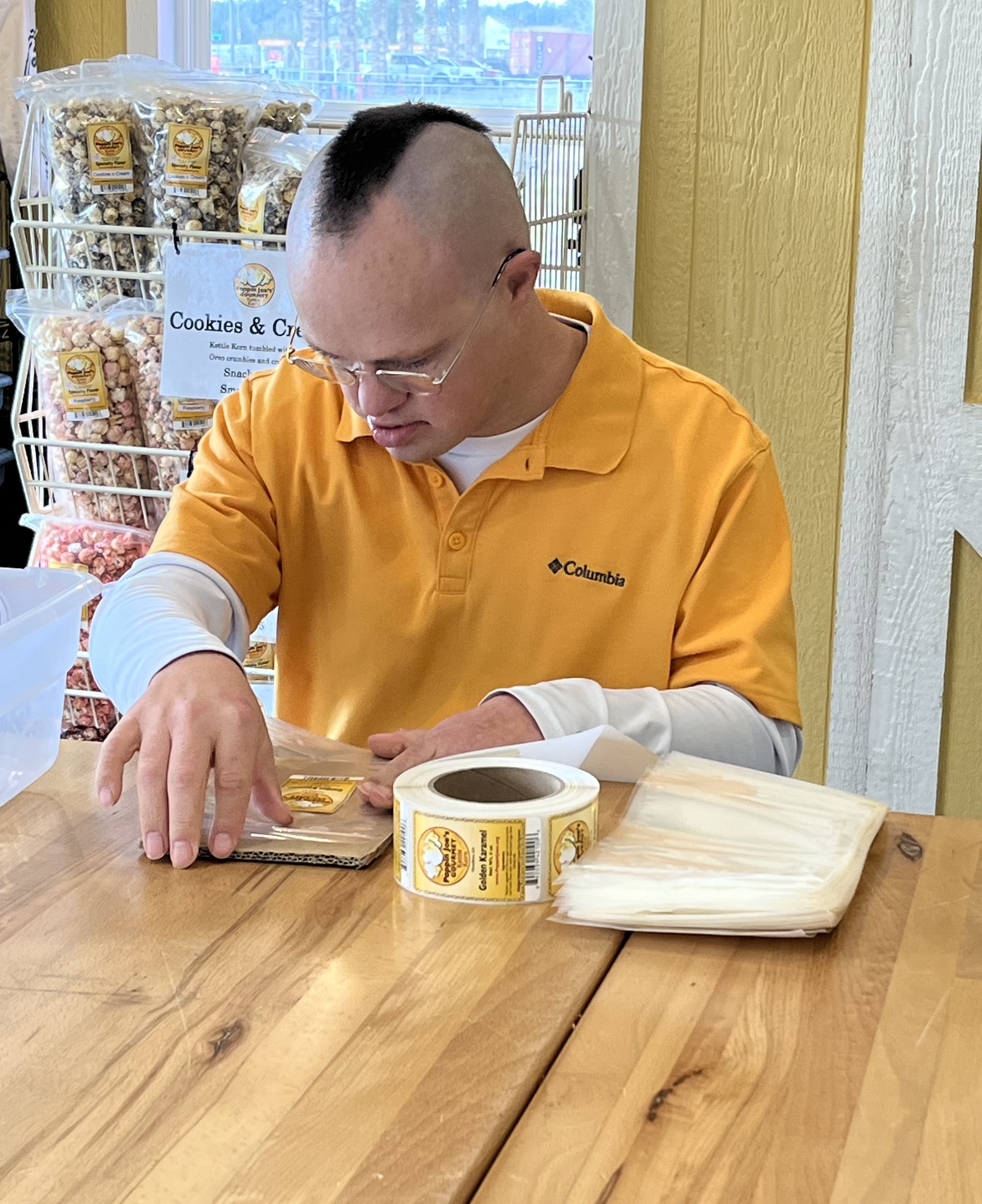
Joe and his parents decided to see if a popcorn business could work for him. For the rest of Joe’s time in school, he and his father made and sold popcorn twice a month near a local store so he could practice all the tasks. As Joe’s sister shared, "he graduated high school when he was 18, but by then, they had already been trialing the kettle corn business in local Walmart parking lots. About twice a month, they would go out and pop, with Dad teaching Joe what to do. They started doing that in 2000.” By 2005, Joe’s mom had written a business plan and they officially launched Poppin’ Joe’s Kettle Korn. When Joe graduated from high school, he was ready to operate the popcorn business.
What Happened
Joe’s parents took the popcorn business idea to a counselor from the Department of Vocational Rehabilitation (VR) who helped them get the information and resources needed to start the business.
Joe received support from several entities to start his business including VR and Kansas Developmental Disability (DD) Council for supplies. Griffin-Hammis Associates helped Joe's family write a Plan for Achieving Self-Sufficiency (PASS) to submit to the Social Security Administration (SSA). The PASS helped Joe secure funding for more startup business supplies.
Poppin’ Joe’s Gourmet Kettle Korn was one of the first businesses in the country to be owned and run by a person with IDD. Poppin’ Joe’s was run as a sole proprietor—100% owned by Joe—out of his family’s garage in Kansas for 15 years. Joe’s parents supported him with tasks where he needed assistance. The business grew from selling popcorn at local events and stores to selling over the internet. More equipment and more people were needed to handle the volume of business. This meant that Joe could stick to tasks he was especially good at and focus on tasks he had interest in. In some years, Poppin’ Joe’s made over $80,000 in sales.
In 2010, Joe’s sister brought one of Joe's kettle sets to Georgia so Joe could continue to use it while visiting with her family. In 2020, Joe moved to Georgia to live with his sister and her family with the plan to continue running Poppin’ Joe’s from there. Joe continues to maintain other kettle sets in Kansas that he uses during visits.
After Joe moved to Georgia, he needed to learn about Georgia’s laws and rules for small business ownership and operation and identify different resources for equipment and supplies. The family again worked with staff at Griffin-Hammis Associates, to learn about licensing the business in Georgia and to fund supplies and equipment. For example, Georgia’s Department of Agriculture licensing rules did not allow the business to be run from their garage. Joe and his family approached the county economic development office for help finding a business location and were connected to the county business developer. The business developer introduced them to a campground owner who allowed Poppin’ Joe’s to rent land to place a building for a dollar a year. They applied for and received grant funding from the National Down Syndrome Society as well as a private foundation to cover startup costs for his new business location in Georgia.
Impact
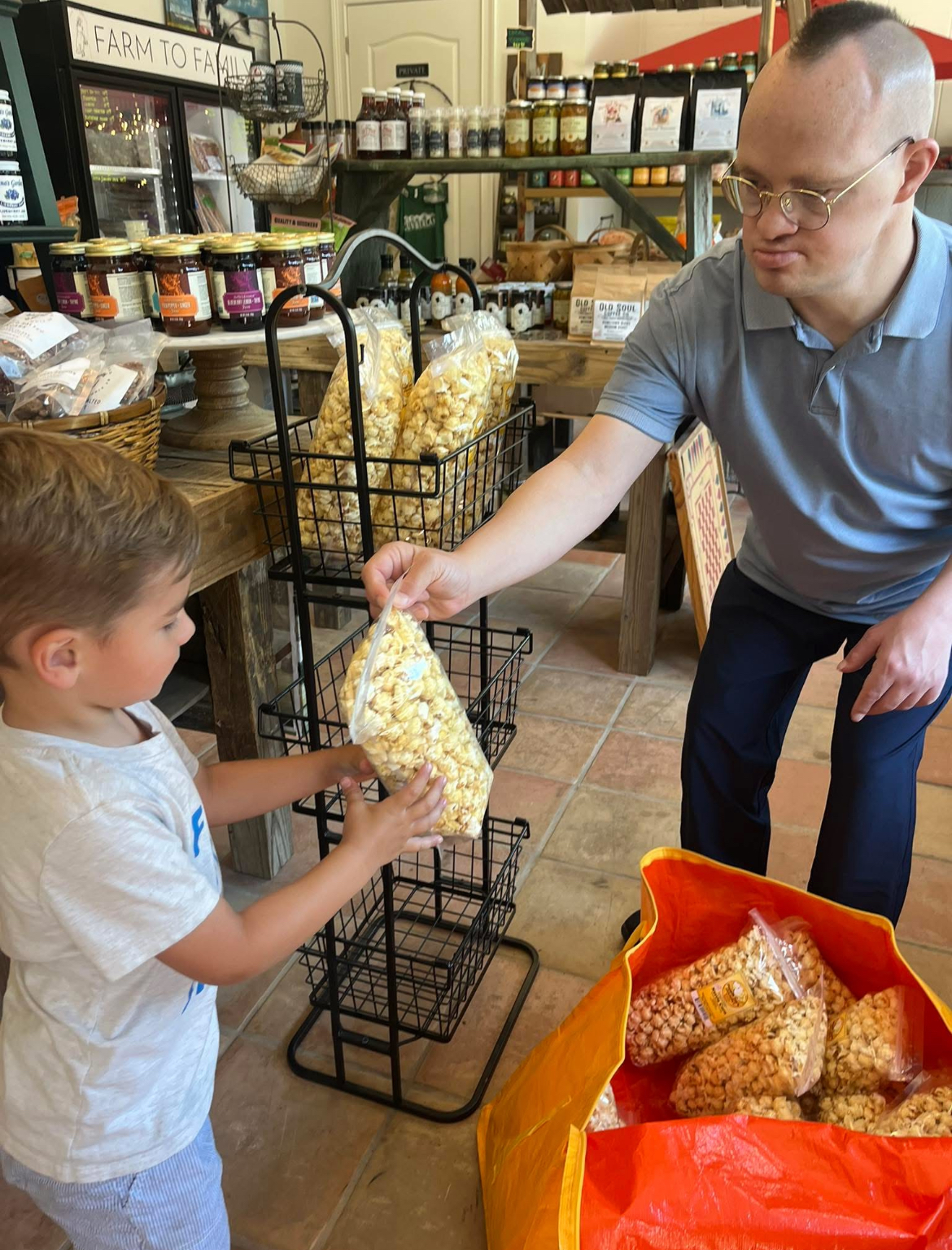
Poppin’ Joe’s is licensed as a candy production facility in Georgia. Over the last few years, Joe’s business has done well in its new location. Joe can sell directly to customers who walk in; prepare orders for delivery to local customers; sell wholesale through local markets, concession stands, festivals and other events; and sell online. Although Joe did many of the tasks related to kettle corn in the past, he has hired people to do the labor-intensive tasks now, and he contributes in any way he can as the face of the business.
Lessons Learned
Have high expectations: When families and support teams believe in an individual’s potential and focus on their strengths and interests, it lays the foundation for positive outcomes. Joe’s family believed he had a purpose and the ability to contribute meaningfully to his community. That belief guided every decision they made. They focused on Joe’s strengths and worked to find opportunities that matched his abilities and interests. As Joe’s sister put it, “Everyone has strengths. The key is to focus on what your loved one enjoys and is good at, because when work aligns with their strengths, it won’t feel like work at all.”
Learn about state policies before relocating: Before relocating, families should research how disability services work in the new state as licensing, regulation, and availability of paid supports from state agencies differ and may not transfer between states. Joe's family learned this firsthand when moving from Kansas to Georgia, where they had to navigate new procedures and licensing requirements.
Start early and plan ahead of life transitions: Planning early for major life transitions such as finishing school or starting a job can open better opportunities. In Joe’s case, his family started preparing for his future career well before he graduated from high school. They also planned in advance to sustain his business operations as his living arrangements changed.